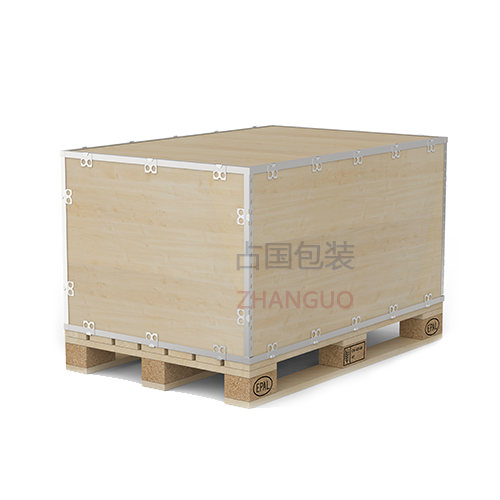
Q1: What is a Steel Strap Box? How is it different from a standard wooden crate?
A Steel Strap Box is a collapsible packaging case made of plywood panels reinforced at the edges with galvanized steel straps and lock clips. Key differences from traditional nailed wooden crates are:
Structure: The body uses plywood treated under high heat and pressure; edges are secured with steel straps and special clips, requiring no nails.
Strength: Steel strap reinforcement provides greater compression and impact resistance, ideal for heavy equipment.
Assembly: Can be quickly assembled/disassembled, is reusable, and saves over 80% storage space when collapsed.
Compliance: Typically exempt from fumigation (plywood is heat-treated), meeting ISPM15 international phytosanitary standards.
Q2: What types of goods are Steel Strap Boxes suitable for?
They are particularly ideal for:
Heavy machinery, automotive parts, motor equipment;
Precision instruments, electronic products (with internal cushioning design added);
Chemical products, industrial raw materials requiring high-strength protection;
Export goods (due to fumigation exemption for faster customs clearance).
Q3: What is the load-bearing capacity of a Steel Strap Box?
Standard Steel Strap Boxes can handle static loads of 2,000 to 5,000 kg, depending on dimensions, plywood thickness (typically 12-18mm), and steel strap specifications (width, gauge). Special reinforcements (e.g., double straps, reinforced corner posts) can increase capacity further.
Q4: Are Steel Strap Boxes reusable? How are they maintained?
Reusability: Designed for disassembly, they can typically be reused 5-10 times under normal conditions.
Maintenance Tips:
Clean the panels after disassembly and check strap clips for integrity.
Store in a dry environment to prevent plywood from warping.
Damaged plywood panels can be replaced individually; steel straps can be re-tightened.
Q5: Do Steel Strap Boxes require fumigation?
Usually not required. The plywood used is heat-treated per ISPM15 standards, eliminating the need for fumigation. However, if solid wood frames or accessories are used, requirements of the destination country apply.
Q6: Are Steel Strap Boxes reliable in humid or ocean shipping conditions?
Moisture Resistance: Plywood naturally resists moisture better than solid wood; waterproof coatings can be applied for extra protection.
Ocean Shipping Suitability: The steel strap structure provides uniform force distribution and high shock resistance. Adding desiccants inside and waterproof film outside is recommended.
Q7: Can you customize sizes or add special features?
Full customization is available:
Dimensions: Tailored to cargo size; maximum single-unit length is flexible (via segmented design).
Features: Options include casters, lifting lugs, ventilation windows, anti-static coatings, and internal cushioning.
Markings: Company logos, shock/moisture warnings, and handling symbols can be printed.
Q8: Do you need special tools to assemble a Steel Strap Box?
Only basic tools (e.g., rubber mallet, pry bar) are needed for manual assembly:
Align the base and side panels, wrap steel straps around the box.
Insert lock clips into strap holes and secure.
Place the top panel and secure with straps.
(Detailed assembly videos or diagrams are provided.)
Q9: Are Steel Strap Boxes more expensive than traditional wooden crates?
Initial Cost: Slightly higher than standard nailed crates, but significantly lower than solid wood frame crates.
Overall Cost: Lower long-term cost due to reusability, fumigation exemption, and space savings in storage/transport. Ideal for high-frequency or closed-loop logistics.
Q10: How do you ensure safety during transit?
Internal Reinforcement: Use air bags, foam, wooden braces, or blocking to secure cargo.
External Protection: Wrap the box with stretch film or banding to prevent strap loosening.
Testing & Validation: We offer transit simulation testing per ISTA/ASTM standards to ensure solution reliability.